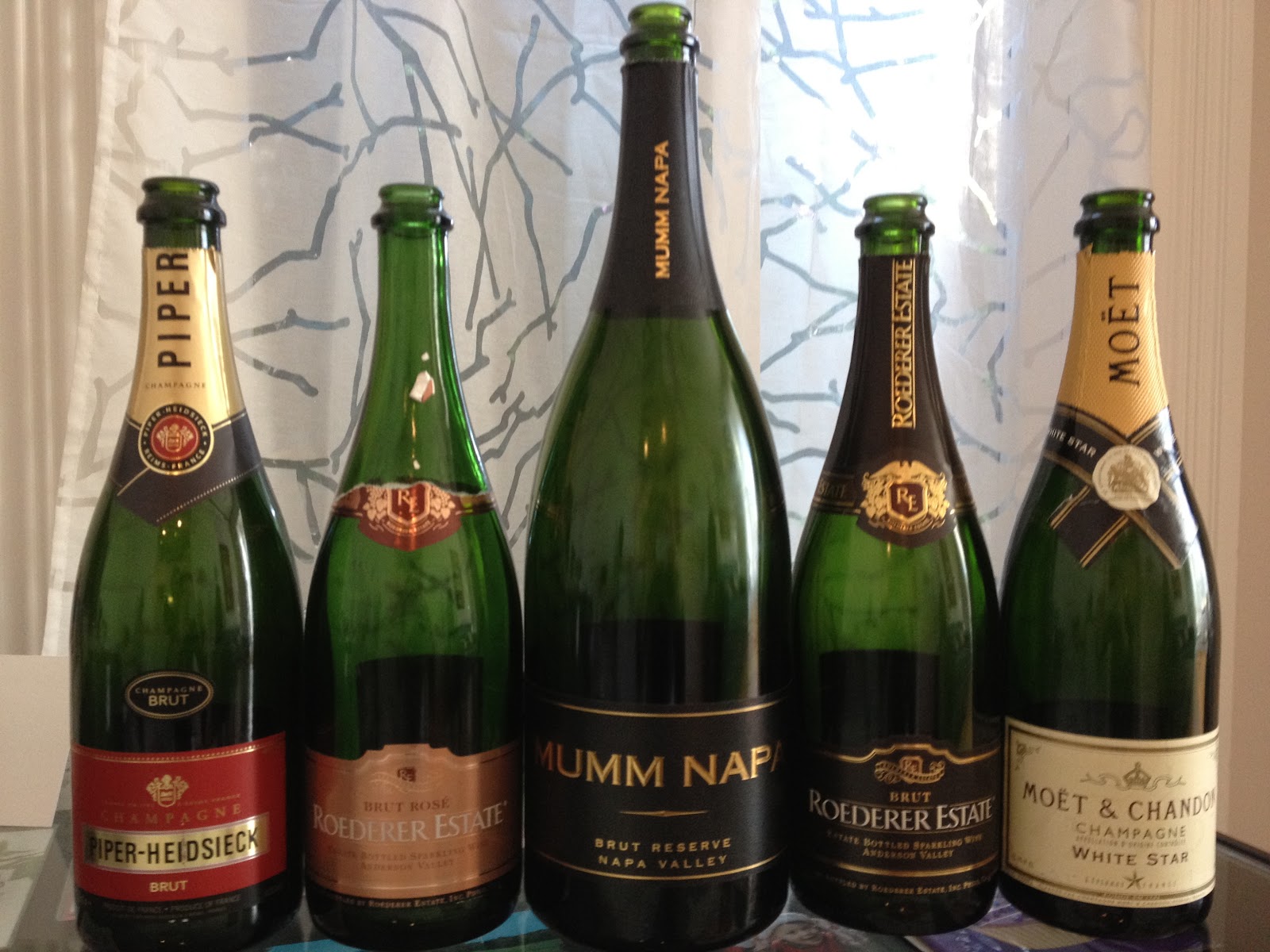
Tuesday, May 1, 2012

Why We Love(d) the 90's

A few weeks ago I visited Indiana with my boyfriend and we raided his dad's wine cellar. His dad had managed to get himself on a bunch of coveted wine lists in the 80s and 90s and still has a lot to show for it. Now a diabetic, he doesn't drink wine as much as he used to, so he said we could put together a couple cases and bring them back to California with us. I've been lucky enough to sample some of these cellar treasures, including Ridge from the 80s and Leonetti from the 90s. It is always a gamble with older wines - you never know how they will keep. This basement wine cellar that we raided is not actually a wine cellar at all - it's a boiler room. So every time we open one of these bottles, the cork crumbles, we dismantle it in pieces, push in what we can't get out, and usually end up decanting and sometimes passing the wine through a coffee filter (into a coffee pot if we've run out of decanters). The wine may be oxidized, it may have lost all its fruit. Or it may be amazing, complex, funky, silky, and downright delicious. Here are a few winners from the latest collection:

 Leonetti Cellars 1992 Select Walla Walla Valley, Washington
The components of this wine are unknown, but I suspected it was a Merlot/Cab Sauv blend. It was gorgeous, fruity, spicy and chewy, with no oxidation and a beautiful richness.

Newton 1990 Merlot Napa Valley, California
This wine wasn't as clean as the previous but still had a lot of fruit and spice to go with the funk.

Chateau Phelan Segur 1990 Saint-Estephe, Bordeaux, France
This 1990 Bordeaux, which is dominated by Cabernet Sauvignon in the blend, still had a lot of fruit, plus richness and complexity that is so typically Bordeaux. I've learned through my tasting and study that really good Bordeaux needs at least 10 years to be drinkable, at least to my liking (the tannin needs time to calm down) and this was a perfect example. Blackberry, leather, barnyard, and dried fruit mingled with a surprising acidity (that calmed down after being open for a day) and tannin that suggested we could have waited a bit longer to open it, but not too much longer. 

A. Rafanelli 1991 Zinfandel Dry Creek Valley, Sonoma County, California
I tried this wine after it being open for a day, and it was pretty oxidized, but it still had a bit of fruit and spice and was drinkable. Jeremy said it was much better the first day.

Both of these last two bottles had been leaking, which was why we decided to open them. You can see how the bottle tops are kind of moldy and icky. 

All of these wines threw a lot of sediment, as can be expected in older wines, and the 1990 Bordeaux also left tartrate crystals behind, which is from the acidity precipitating out. 

We were just saying that we should probably get some cheap Tuesday night wine to drink so we are not opening interesting and potentially amazing 20-year old bottles on a whim, but really, we are opening the bottles from Indiana assuming they are bad from the storage conditions, but hoping they will surprise us. So far so good! Thanks again, Jeff.

Sunday, April 8, 2012

Ridge Lytton Springs

Recently I visited Ridge Lytton Springs, the Sonoma county location of Ridge where they grow their signature Zinfandel blends. The main vineyard was certified organic in 2011, and it is an Italian field planting, which means that it is a mix of grape varieties including Zinfandel, Petite Sirah, Carignane, Mataro (Mourvedre), and Grenache. This is a common practice in Europe, with vineyards being planted like this and harvested together in a "field blend." At Ridge Lytton Springs, someone knows exactly which plant is what, so they know what quantity of which grape they are putting into the blended wine. Some of the vines on the Lytton Springs property are as old as 116 years - they are so old and their roots so deep that they reach the water table and don't need irrigation.  In general, Ridge vineyards are dry farmed and only young, new plantings are irrigated individually until they establish a deeper root system.

A note on labeling: In the United States, in order for a wine to bear the varietal name on the label (i.e., Zinfandel) it must contain 75% of that grape. The other 25% need not be named. At Ridge, nearly all of their wines are blended, and the vineyard name is usually the distinguishing factor on the label. Ridge's Sonoma county vineyards tend to be Zinfandel-based blends, while the Santa Cruz mountains properties south of San Francisco are dominated by Bordeaux-style blends of Cabernet Sauvignon, Merlot, Petit Verdot and Cabernet Franc (including the famous Monte Bello that I have had the pleasure of tasting before).

Onto the Ridge bottlings: first, 2009 Ridge Lytton Springs. 71% Zin, 23% Petite Sirah, 6% Carignane; 14.5% alcohol by volume. It was gorgeously fruity upfront and then became spicy and earthy as it sat in the glass.  Then we tried the 2003 vintage - wow. Coffee, chocolate, warm spice, herbs. Extremely balanced - 76% Zin, 18% Petite Sirah, 6% Carignane. Could age another 10 years by most people's standards, 20 years for wine geeks. We got a bottle of the 2009 and plan to age it for at least 5 years, since the 2003 was so good after 7. We could try to age it for 20 but I don't see that happening.


Next we moved to the Geyserville vineyard, with 80 year old vines in a similar field blend but with more Carignane than Petite Sirah (17% vs 6%). The 2009 Ridge Geyserville had bright, dark red fruit and the acidity was slightly more balanced than the Lytton Springs. The 2003 vintage was more complex, with tobacco, spice, a hint of dried fruit, and a similar earthy- and herbal-ness.

A couple others we tried:
2007 Mazzoni Home Ranch - 58% Zin, 39% Carignane, 2% Petite Sirah. Similar fruit character but lighter, more spice and acidity - a great food wine, very European in style.
2010 East Bench Zinfandel - 100% Zin, from a younger vineyard. 15.1% alcohol by volume. Whoa, strawberries! Super fresh, ripe strawberries hit me immediately as I smelled and tasted it, then black pepper moved in to dry out the sweet attack. Very interesting wine.

We migrated to the barrel room at that point, where I was amazed by their stacking system and barrel processes. Every time I enter a barrel room I immediately start thinking about the logistics of the barrels - how are they stacked, how are they filled, how are they emptied? Who does this work? - since I was once in that position. At Ridge Lytton Springs, a series of ropes and pulleys hangs from the ceiling, from which the cellar workers hang to empty, clean, and fill the barrels, keeping them in their same formation, as many as 10 high. I don't quite understand how this works; I would love to see them in action. They must use pumps... but how do the barrels dry after they are washed? Wonder if I could schedule an appointment just to watch sometime. Anyway, regarding the oak barrels, Ridge uses only American oak, and only 20-25% new.


In the barrel room, there were a few special bottles open for a separate event going on, so we got to try some new wines either pending release or just released. The first was the 2009 Estate Merlot - a 100% single varietal bottling only previously made in 1974, 1976, and from 1991-1997.  It had a classic Merlot aroma with spice, leather, red fruit, and vanilla. 75% new oak was used. We then had the 2009 Klein Cabernet Sauvignon, which happened to be one of the wines from the component tasting at the last Ridge Blogger's Tasting that I attended at Monte Bello in December 2011. It's 100% Cab Sauv with classic black fruit, dark currant, juniper, eucalyptus and spice. Nine barrels were selected from the Klein vineyard to make this single varietal wine. Lastly we tried the 2009 Monte Bello, 72% Cabernet Sauvignon, 22% Merlot, and 6% Petit Verdot. It was more earthy and tannic than the previous two, with nice vanilla notes. We compared that with the 2006 Monte Bello, which was 68% Cab Sauv, 20% Merlot, 10% Petit Verdot, and 2% Cab Franc. It was very Bordeaux-like, with red fruit, leather, vanilla and warm spices. Extremely long length.

For dessert we had the 2007 Geyserville Essence, a sweet wine made from Zinfandel grapes. Lush bosenberry pie and raisins were balanced by that Ridge acidity.

I'm so glad I finally made it to Lytton Springs! Special thanks to Eliot for a wonderful tasting experience.

Tuesday, February 21, 2012

Gravity Flow Winemaking at Vineyard 29


Lately I've been hearing a lot about gravity flow winemaking. I first encountered it in South America, having visited wineries in Argentina, Chile and Uruguay that are gravity-driven. The belief is that moving the wine via pumps is disruptive to the wine and steals some of its character. Gravity-driven wineries are constructed on multiple levels so that wine is transported from higher tanks to lower tanks by gravity. Conceivably you could require as many as 4 levels - sorting level for the grapes/juice to go in from the press, a level below for racking off sediment, another level below for racking off fermentation lees, and another level down into the barrel cellar. I was always skeptical - what if you run out of tanks in the lower levels? What about blending? What if you need to move the wine up to an empty tank? And forget logistics of the hoses - there would need to be trapdoors and tunnels everywhere. The mystery was solved during my recent visit to Vineyard 29 in Napa. There I understood the missing link - a holding tank that moves between levels via elevator, since they have just 1 level of tanks above the barrel cellar. With their elevator holding tank they have more flexibility to move the wine without relying on available tanks on a certain level. Hoses are snaked through tunnels in the walls and floor.

Above Tank Level

Tank Level

Holes for the hoses to snake through to reach the Lower Level

Red wine barrels in the cellar


Once we made our way through the gravity tour, we were welcomed in the barrel cellar for a round-table tasting.


Their 2009 Estate Sauvignon Blanc was unlike any I'd ever had. It was luscious, flowery and tropical while also maintaining the acidity and minerality so coveted in Bordeaux. The use of concrete tanks allows for an air exchange that makes the wine less sensitive to oxidation, so it can age for longer than most white wines - it was aged for 18 months in water-soaked oak barrels (minimal toast) before bottling. This wine was so complex and alive, yet refined and pretty. The finish was super long.

Concrete holding tank for the Sauvignon Blanc

The 2008 Aida Cabernet Sauvignon was blended with small amounts of Merlot and Petit Verdot. It was jammy and thick with super dark blueberry fruit. It was quite balanced in terms of tannin, acidity and alcohol - which was 14.8% but the wine didn't taste hot.

The 2009 Estate Cabernet Franc (75% Cab Franc/25% Cab Sauv) was also unlike any I'd ever had. It had a gorgeous rose/graphite/leather nose with an earthy spice and marked minerality on the palate. Not a ton of fruit but I did notice dark plum. It was very rich and complex with a long finish.

All the wines were decanted 1 hour before serving

Thanks again to Austin for a truly memorable experience - I look forward to enjoying the wines I took home.

Darioush


Last weekend I made another visit to Darioush in the Napa Valley, this time for a sit-down "table-side" tasting. A flat panel tv in our corner of the tasting room showed a video of the field crew harvesting the grapes at night - common practice here in California where fall days can be too hot for harvesting. I think this is such a great process - the field crew works all night and then by 7am the day shift gets to work sorting the grapes and getting the juice into tanks. I'm sure in many parts of the world (warmer climates mostly) this type of shift work is done; in the Finger Lakes it didn't really make sense for us, especially since it could get pretty cold on those fall nights.

Greg, our server, was very knowledgable about the wines and the valley. Darioush wines are made from 90% estate grapes (from vineyards they own) and 10% from vineyards that are leased over multi-year agreements. Owning your own grapes or at least leasing them is important, because it allows you to have control in the vineyard, where wine is born. Knowing the land and the vines gives you a leg up when it comes time to make harvesting decisions. The wines tasted were not far from the lineup I had on my first visit there almost a year ago - Chardonnay, Pinot Noir, Merlot, and Cabernet Sauvignon. The Cab is their flagship wine and I had tasted the 2007 in March and loved it. This time I got to taste the 2006 next to the 2008 (2007 is sold out because it got great ratings and everyone went crazy for it). The 2006 was obviously smoother, with a silky texture and long finish, but the 2008 had tons more fruit and was much more exciting. The tannins were still gripping but you could imagine how a couple years in the cellar would really do this wine well.

Thanks again to Ryan and Greg for their impeccable service and attention! I highly recommend a visit to Darioush.

Thursday, February 16, 2012

Evolution of a Brand

When my former employers took over Hermann J. Wiemer Vineyard in 2007 from the namesake himself they made some subtle changes. First, they began hand sorting all the fruit that came into the winery. While extremely labor-intensive, this elevated the quality level and made the juice more "clean" - free of leaves, bugs, and other imposters that can find their way into the grape clusters. Secondly, Hermann had been experimenting with his different Riesling plots, making a Reserve Riesling from 100% one or the other in different years. In 2007, Fred, the current winemaker, decided to make 2 single vineyard Rieslings from those plots, which they called HJW Vineyard (the original site that Hermann planted in the '70s) and Magdalena Vineyard (land Hermann acquired and planted in the late '90s, now bearing his mother's name). The Reserve Riesling became something else - a small bottling of the best blend in the winery, from the various pickings and vineyard plots that were vinified separately.

Last weekend I did a comparison of the 2003 Riesling Reserve, Hermann's experiment with 100% fruit from the Magdalena vineyard site, and the 2009 Magdalena Vineyard Riesling, which comes from the same place. I worked on the 2009 during my time at the winery. Both had Wiemer's signature acidity, but of course the 2003 was more subtle due to the aging and the fact that 2009 was a wet year that resulted in extremely high acidity in the grapes. (All the 2009's have a crisp acidity that is just great for a variety of foods or several years in the cellar. Sadly, many are sold out, but you can contact the winery to see what is left in the library.) The 2003 was elegant and creamy while the 2009 was vibrant and zesty, but both had the tropical and stone fruit characteristics of fruit from this vineyard site.


A note on the packaging differences of these wines: 2003 is in the classic emerald green bottle typical of many German Rieslings. 2009 is in a taller olive bottle, which is now the status quo for the Reserve bottlings at Wiemer. It's a nod to the more high-end German Rieslings. Also notice the type font was changed and the overall layout and proportion of the label details were improved.


The one constant is, of course, the source of the fruit and the fact that Hermann chose the best sites in the Finger Lakes to make award-winning American Riesling in a tradition that continues today.

Sunday, January 1, 2012

Sunday, December 18, 2011

Ridge Blogger Tasting - Me vs. the Typewriter

Last weekend I attended the last Ridge Bloggers Tasting of 2011. We were given this picture hint as to the theme of the tasting:


I thought to myself, if we are going to go from live Twitter-fall to tasting notes on typewriters, this is going to be interesting. I arrived at Ridge Monte Bello on a Sunday afternoon in December to see 4 typewriters from Tasting Room Manager and Host Christopher Watkins' personal collections, plus the usual group of Bloggers on ipads and iphones, and of course, the live Twitter-fall. Our entry fee for the tasting was that everyone had to compose a tasting note on the typewriter. I had never used one before so I was excited. Here I am in action:

(Notice the gadget next to me - it's not an iPad but a Kindle Fire. Not to go off on a tangent, but the most shocking omission from the Fire's design is the lack of a notepad feature. So since my typewriter skills are sub par I took the bulk of my notes in an email composed to myself on the Fire.)

The reason for this theme was a throwback to the early Monte Bello Ridge property owners and the culmination of the Ridge we now know today. Ridge has just released the first vintages of these original-property-specific wines from three family properties that Ridge now owns (Torre, Perrone, and Klein), including the current Monte Bello site where we sat.

After an aperitif of Ridge Estate Chardonnay 2008, my favorite California Chardonnay, we began tasting the components.

First we had the 2009 Ridge Klein Cabernet Sauvignon. It was classic Monte Bello Cab with eucalyptus and mint, plus woodsy, herbal notes. The fruit was muted and the wine was silky smooth on the palate.

Next was the 2009 Ridge Torre Ranch Merlot. This wine seemed to be having an identity crisis of whether it was Merlot or Cab. It was closed on the nose but fruity and leathery on the palate, and much more tannic than the Cab. The fruit indicated Merlot but structurally it leaned more in the Cab direction.

Finally we tasted the 2009 Perrone Cabernet Franc, which was my favorite of the three. It was very rich, with deep fruit, fresh raspberry, warm spice and some herbal notes.

All the wines had great acidity and you could imagine how well they would play together.


Next we did an estate blend vertical from the years 2003, 2004, and 2005. These are Ridge wines from the Santa Cruz Mountains blended from the above-mentioned grape varietals in varying quantities from year to year.


The 2003 had a gorgeous nose of cinnamon, clove, a bit of cornbread and some vegetal characteristics. On the palate there was nice fruit and spice, but the tannins could use some further aging to soften.

The 2004 smelled a little funky and like creamed corn. On the palate it was herbal with firm tannins. Chris explained that for some unknown reason the wines produced in even vintage years tend to be a bit funkier than the odd vintage years.

The 2005 had a more floral nose and was brighter and fruitier than the previous two, but the tannins were very grippy and need some time to smooth out in the cellar.

For a treat, fellow blogger Allan brought a mystery wine for us to try. He mentioned it came from his cellar of Ridge treasures (which is vast and includes many member's-only releases). I guessed it was a Syrah-based wine, due to the smoky, chocolate, dark fruit characteristics that I found in the wine. It was delicious, but I was wrong - it was a 1994 single vineyard Zinfandel from the Monte Rosso property in Sonoma Valley that Ridge produced that one and only year.  There is only 1 case left in the Ridge Library, and Allan shared one of his two bottles with us. I am very thankful to have tasted this rare wine. Thanks again, Allan!


As always, a trip to Ridge Monte Bello is extremely rewarding and reinforces my love for wine and the industry. Ridge wines are always unique and interesting, and their potential for aging is remarkable. Thanks again to Christopher for hosting these fantastic events and inviting me.

For more posts and pictures from this event: 
A Ridge Blog
http://blog.ridgewine.com/2011/12/20/for-those-about-to-type-we-salute-you/
Come for the Wine
Stay Rad Wine Blog
Give Me Grapes

My past posts on 2011 Ridge Blogger Tastings:
First Bloggers Tasting:
Second Bloggers Tasting:

Saturday, December 17, 2011

Wine PR

Last week at work some reps from PR Newswire hosted a wine reception to tell us more about their services. What a great idea, PR Newswire! Right up my alley. I learned more than I ever thought I knew about PR Newswire and tasted some nice wines as well. They brought a rep from The Wine Club, a great wine shop in SOMA near the San Francisco Wine Center, to tell us about the wines. He put together a little California vs. Spain tasting that was very interesting.

Whites:

Georis 2009 Sauvignon Blanc, Monterey/CA - This was an oaked SB and tasted more like a light California Chardonnay. Still lots of acidity and zest but very smooth from the oak. Blindfolded or not I could swear it was Chardonnay each time I sipped it. Shows how much winemaking can affect varietal character.

Pazo Senorans 2010 Albarino, Rias Baixas/Spain - Classic Albarino with bright herbal fruit and crisp acidity. Very pleasant.

Reds:

Tablas Creek Vineyard 2010 Patelin de Tablas, Syrah/Grenache/Mourvedre/Counoise blend, Paso Robles/CA - From our host's description I wanted to like this wine more than I actually did. I thought it was thin and harsh and tasted like cough medicine.

Celler Pinol 2008 Sa Natura, Carinena/Merlot/Cab Sauv/Syrah/Tempranillo blend, Priorat/Spain - This wine was rich, deep and big with lush dark fruit and firm tannin. I could see this aging well for several more years. For a big wine I often look to Priorat, but I do caution that the alcohol tends to be high in these wines.


Obviously and unsurprisingly, Spain won it for me.  Thank you to Blueshirt, PR Newswire, and The Wine Club!

Friday, December 9, 2011

The Gift that Keeps on Giving


I keep going back to this wine. At the Wine & Spirits Top 100 Tasting, I did a trade with the reps at Loimer next to the Wiemer booth and got this bottle of Gruner Veltliner. I opened it before Thanksgiving to have with a roast chicken dinner, and it was a very nice wine, the best GruVe I've had. GruVe is usually an herbaceous, citrusy, crisp wine, but the nose and flavors can be muted sometimes. The Loimer is concentrated and has a nice tropical nose with citrus and herbs to boot. Since this wine is in a screwcap bottle, it can keep for a while. I've had a glass here and there for the last 2 weeks and it's good every time, very versatile with a lot of different dishes. I finished off the bottle the other night with some dungeness crabs that I had gotten at the grocery store for dinner (now in season, $6.99/lb!) and it was a perfect pairing!

Sunday, December 4, 2011

Giving thanks to Leonetti


This Thanksgiving I got to try 2 bottles of 1996 Leonetti Cellars Walla Walla Cabernet Sauvignon. The corks were difficult to extract, so both bottles were decanted. The first was actually decanted with a significant amount of cork pieces, so we then filtered it through coffee filters (yes, it's the one in the coffee pot). The second bottle was a little easier to open so we decanted it without any floaters. I was so curious to try both wines and see if there was a difference, and there was! The non-filtered version was much brighter and fruitier. The filtered one lacked that vibrancy. I tried the filtered one first, and don't get me wrong, it was delicious. But then when I tried the non-filtered one it tasted even better. When I was working at Wiemer, Fred the winemaker taught me that everything you do to a wine robs it of some character - every racking, every filtering. This could have been one such example of the truth in his words. (But in a finished wine like this, there is always the chance of bottle variation, especially in wines that have aged.)


I like how Leonetti's labels say "Appellation American." Happy Thanksgiving!