Showing posts with label Sauvignon Blanc. Show all posts

Sunday, October 19, 2014

New World vs. Old World

As the line between new world and old world wines continues to blur, last week at San Francisco Wine Center we found ourselves stumped this evening as we blind-tasted through 6 comparisons of typical varietals made by old world and new world producers. With each pair, the class was literally split every time on which was which. As Mary Burnham, wine writer, explained, when we talk about old world, we mean Europe, while new world encompasses everywhere else. Old world wines are generally more earthy and savory, with marked acidity and minerality and less alcohol. New world wines are typically more fruit-forward, less acidic, and higher in alcohol. Did these generalizations hold up in this group?

In the first pair, wine #1 was fruity and dry, with grassy notes, citrus peel, and marked acidity. Many guessed it was a New Zealand Sauvignon Blanc - but it was a white Bordeaux. Wine #2 was creamier, with sweet vanilla oak, lemon merengue, and peach; more complex, silky but still crisp. Were we in Pouilly-Fumé, France? Actually, Washington State. I didn’t even know anyone was making Sauvignon Blanc in Washington – this was actually majority Semillon (61%) with 20% Sauvignon Blanc – but I expect I will be re-visiting this producer, Buty.

In the next pair, many immediately thought #3 was a German Riesling due to its pungent petrol character. I got beyond that and began to think we were in Australia, since theirs take on that character as well but tend to be very lime-y and dry, which was how I would characterize this wine.  Wine #4 was more floral and peachy, like many Rieslings I’ve had from Finger Lakes producer Hermann J. Wiemer that highly mimic a German Mosel style when young.  The big reveal - #3 was from Oregon and #4 was Austrian!

The next two sets were a bit more obvious to me – Chardonnay and Pinot Noir. New World chardonnay tends to have more pronounced oak, and I almost always prefer a more refined French style. With Pinot Noir, new world versions tend to be very fruity, whereas French versions are more funky and earthy, which I also prefer. Both sets were more typical expressions of new world and old world, though not obvious to everyone.

The second set of reds was a fun one – meaty, savory and spicy with firm tannin against brambly, sweet spice and soft tannin. We had ourselves a Crozes-Hermitage Syrah against a Barossa Valley Shiraz. We learned that the Barossa Valley does not cool off at night, so the grape skins don’t thicken, contributing to softer tannins in the wine. This was a great pair that solidified my favorite for the night in the Crozes-Hermitage, since I love this style and producer and the price cannot be beat, especially for a wine that will continue to improve with cellar time.
The last set was another tough one, mostly because both these wines were very tight and could use some more aging and air. The first had a eucalyptus nose with black fruit and violets on the nose. The second was a bit more closed on the nose but we could discern some vanilla. With a few bites of cheese, things started to become clearer - these were Cabernet-dominated wines, Bordeaux from Graves against Napa Valley’s Opus One.

A wonderful selection of wines with some curveballs…
  1. Chateau Lamothe de Haux White Bordeaux 2011 ($15)
  2. Buty Semillon-Sauvignon Blanc-Muscadelle 2010 – Columbia Valley, WA ($25)
  3. Chehalem Willamette Valley Dry Riesling Reserve 2007 – Oregon ($20)
  4. Hogl Wachau Riesling Smaragd Bruck 2007 – Wachau, Austria ($30)
  5. Domaines Leflaive Macon Verze 2012 – Burgundy, France ($39)
  6. Wente Riva Ranch Estate Chardonnay 2012 – Arroyo Seco, Monterey, CA ($18)
  7. Flowers Van der Kamp Vineyard Pinot Noir 2000 – Sonoma Mountain ($60)
  8. Domaine Trappet Chambertin Grand Cru 2000 – Cote de Nuits, Burgundy, France ($200)
  9. Alain Graillot Crozes Hermitage 2012 – Northern Rhone Valley, France ($30)
  10. Two Hands Gnarly Dudes Shiraz 2011 – Barossa Valley, Southern Australia ($28)
  11. Chateau Smith-Haut Lafite 2006 – Graves, Left Bank, Bordeaux, France ($90)
  12. Opus One 2006 – Napa Valley, CA ($290)


Wednesday, January 22, 2014

Mendocino Day 1: Campovida


I discovered Campovida at the SF Vintners Market, a large wine tasting in San Francisco that I attended last November. Owner Gary told me about their property in Mendocino county, and I made a mental note to visit on my next wine country trip.  I had been hearing a lot about Mendocino, so the recent three-day weekend seemed like the perfect time to check it out. I made arrangements to stay on the Campovida property, which is beautiful and expansive, with vineyards, a large garden, bocce ball courts and old barns that have been converted to various event spaces as well as the winery and sleeping rooms. Campovida would be the perfect place for a destination wedding or a weekend retreat. The property has a long history going back to the Pomo Indians, but probably most interesting (at least for purposes of this blog) is that it was an old hops ranch and then was bought by the Fetzer family, a large winemaking family that had a big commercial presence in the 1980s. In the early 1990s, the Fetzers sold the brand and this property to Brown-Forman while retaining all of their other vineyard properties; 5 of the 11 Fetzer children went on to manage the different properties and even start new wine labels (including Saracina Vineyards, which we also visited). In 2010, Anna and Gary purchased the organic property from Brown Forman and made it Campovida.


The winemaking style at Campovida is minimalistic, using native yeast, natural fermentation and neutral oak. Production is around 3500 cases and the goal is to stay below 5000 cases. The wine is sold direct to consumer with some restaurant sales. The focus is on Rhone varietals with some experimentation in northern Italian white varietals like Arneis and Tocai Fruilano and Italian reds like Sangiovese, Nero D'Avola and Negroamaro. We did some barrel tasting with the winemaker, Sebastian Donoso, who has been there about a year and a half; he was previously assistant winemaker at Saracina and is originally from the Talca region of Chile.

We tasted Arneis first, which had slight orange reflections in the color and pretty herbal notes of anise and lanolin. Grenache Rosé is made in the French style, which means it is picked and vinified with the intention of being a rosé wine (read: high acidity), not an afterthought or by-product of a red wine. Extra time on the lees (dead yeast cells) gives it complexity and body, and the crisp citrus and white flower were very refreshing. Tocai Fruilano was reminiscent of a Sauvignon Blanc (not shocking since they are related genetically), with gooseberry and passion fruit. Roussane had a pretty honeydew melon quality that was very unique. Viognier was spicy with basil and ginger. Sauvignon Blanc was tropical with gooseberry and lychee but austere like the French Sancerre style.


Later on we tried some of the reds, including the aforementioned Nero D'Avola and Negroamaro, which had great acidity and complexity. The Negroamaro was very unique with a fresh black pepper quality. Their red blend, Campo di Rossa, was bright, easy to drink and had great red fruit.

Campovida also farms two types of olive trees - Italian and Spanish - and makes olive oil from both. The Sevillano oil made from the Spanish olive trees brought me back to the delicious fresh green olives that we ate in Spain during our honeymoon. We bought a huge bottle of it (a 750 mL wine bottle, of course), and I can't wait to be brought back to both places each time I have some. And as if it couldn't get any better, Campovida also makes delicious honey from the bee hives on the property.


Conveniently, Campovida also owns a property a mile away in the tiny town of Hopland (population 817), which contains a pizzeria and hotel. I finally got the lunch thing right at Piazza de Campovida, with delicious pizza to fuel the rest of our day, and then we ended up having dinner there too, with Gary and Anna.

Pura Vida is Campovida's wine loyalty program, and with options for 3, 6 or 12 bottles every quarter plus olive oil and honey, I couldn't resist, so we joined our second "wine club."

Our hosts were extremely gracious, welcoming and fun. Ever since we left I have been trying to think of an excuse to go back. Thank you again, Anna, Gary and Sebastian!

For the Bay area locals, Campovida will be hosting the North Coast Rhone Rangers Tasting on February 8th at their Oakland location. More info and tickets HERE.

Tuesday, February 21, 2012

Gravity Flow Winemaking at Vineyard 29


Lately I've been hearing a lot about gravity flow winemaking. I first encountered it in South America, having visited wineries in Argentina, Chile and Uruguay that are gravity-driven. The belief is that moving the wine via pumps is disruptive to the wine and steals some of its character. Gravity-driven wineries are constructed on multiple levels so that wine is transported from higher tanks to lower tanks by gravity. Conceivably you could require as many as 4 levels - sorting level for the grapes/juice to go in from the press, a level below for racking off sediment, another level below for racking off fermentation lees, and another level down into the barrel cellar. I was always skeptical - what if you run out of tanks in the lower levels? What about blending? What if you need to move the wine up to an empty tank? And forget logistics of the hoses - there would need to be trapdoors and tunnels everywhere. The mystery was solved during my recent visit to Vineyard 29 in Napa. There I understood the missing link - a holding tank that moves between levels via elevator, since they have just 1 level of tanks above the barrel cellar. With their elevator holding tank they have more flexibility to move the wine without relying on available tanks on a certain level. Hoses are snaked through tunnels in the walls and floor.

Above Tank Level

Tank Level

Holes for the hoses to snake through to reach the Lower Level

Red wine barrels in the cellar


Once we made our way through the gravity tour, we were welcomed in the barrel cellar for a round-table tasting.


Their 2009 Estate Sauvignon Blanc was unlike any I'd ever had. It was luscious, flowery and tropical while also maintaining the acidity and minerality so coveted in Bordeaux. The use of concrete tanks allows for an air exchange that makes the wine less sensitive to oxidation, so it can age for longer than most white wines - it was aged for 18 months in water-soaked oak barrels (minimal toast) before bottling. This wine was so complex and alive, yet refined and pretty. The finish was super long.

Concrete holding tank for the Sauvignon Blanc

The 2008 Aida Cabernet Sauvignon was blended with small amounts of Merlot and Petit Verdot. It was jammy and thick with super dark blueberry fruit. It was quite balanced in terms of tannin, acidity and alcohol - which was 14.8% but the wine didn't taste hot.

The 2009 Estate Cabernet Franc (75% Cab Franc/25% Cab Sauv) was also unlike any I'd ever had. It had a gorgeous rose/graphite/leather nose with an earthy spice and marked minerality on the palate. Not a ton of fruit but I did notice dark plum. It was very rich and complex with a long finish.

All the wines were decanted 1 hour before serving

Thanks again to Austin for a truly memorable experience - I look forward to enjoying the wines I took home.

Saturday, December 17, 2011

Wine PR

Last week at work some reps from PR Newswire hosted a wine reception to tell us more about their services. What a great idea, PR Newswire! Right up my alley. I learned more than I ever thought I knew about PR Newswire and tasted some nice wines as well. They brought a rep from The Wine Club, a great wine shop in SOMA near the San Francisco Wine Center, to tell us about the wines. He put together a little California vs. Spain tasting that was very interesting.

Whites:

Georis 2009 Sauvignon Blanc, Monterey/CA - This was an oaked SB and tasted more like a light California Chardonnay. Still lots of acidity and zest but very smooth from the oak. Blindfolded or not I could swear it was Chardonnay each time I sipped it. Shows how much winemaking can affect varietal character.

Pazo Senorans 2010 Albarino, Rias Baixas/Spain - Classic Albarino with bright herbal fruit and crisp acidity. Very pleasant.

Reds:

Tablas Creek Vineyard 2010 Patelin de Tablas, Syrah/Grenache/Mourvedre/Counoise blend, Paso Robles/CA - From our host's description I wanted to like this wine more than I actually did. I thought it was thin and harsh and tasted like cough medicine.

Celler Pinol 2008 Sa Natura, Carinena/Merlot/Cab Sauv/Syrah/Tempranillo blend, Priorat/Spain - This wine was rich, deep and big with lush dark fruit and firm tannin. I could see this aging well for several more years. For a big wine I often look to Priorat, but I do caution that the alcohol tends to be high in these wines.


Obviously and unsurprisingly, Spain won it for me.  Thank you to Blueshirt, PR Newswire, and The Wine Club!

Sunday, November 13, 2011

At Ma Peche, the Mother of all Pairings


On a recent business trip to NYC (I now visit NYC and stay in hotels, very different from being a resident there) I had dinner at Ma Peche, part of the Momofuku restaurant empire. Intending to just have 1 glass of wine, we ended up doing a light 3-course meal with a different wine for each course. My choices were semi random, not being at all familiar with the restaurant and cuisine, but they all ended up working out perfectly. It was really fun to try a new place and sample the wine list this way. Here are the pairings we did:

First Course
Summer rolls - pork/shrimp/tofu, lettuce, daikon, peanut
Scallop - coffee, brown butter, lime
Wine: Sauvignon Blanc/Semillon blend, Jean Medeville et fils, Bordeaux, France

Second Course
Beef tartare - soy, scallion, mint
Lamb corn dog - mustard, lamb's lettuce, pickle
Wine: Syrah, Chateau Maris 'Natural Selection,' Minervois La Liviniere, Languedoc, France

Third Course
Cheese plate of Moses Sleeper (Jasper Hill, VT), Prairie Breeze (Milton Creamery, IA), Caveman Blue (Rogue Creamery, OR)
Wines*: Touriga National Blend Ruby Port, Quinta de Honor, Portugal
Tinta Negra Mole, Henriques & Henriques, 'Rainwater,' Madeira, Portugal
*Between these two, the pairings differed depending on the cheese, but overall we enjoyed the Madeira more.

I think only wine geeks really care about food and wine pairing, but I find it pretty exciting to find that perfect combination without trying too hard. Case in point, I guess :)

Friday, March 25, 2011

Take a Napa

It's been raining since I got to San Francisco, which I really cannot complain about since New York just got another snowstorm. I thought maybe if I went up to Napa the weather would be better, but it was the same, rainy and gray with flooded vineyards. They get most of their rain in winter (and early spring apparently), and then the rest of the year will be sunny. Part of my quest for what's next involves sampling the region's wines. After all, how can I determine which winery I would want to work for if I haven't sampled their wines?

First I went to Darioush, which looks like a Persian palace. Impeccable customer service awaits as you view their stainless steel tanks overlaying a blue tile floor and press pad overlooking their estate vineyards. Despite the lavish decoration, you can still see a working winery. Here I learned that a lot of wineries in Napa harvest at night, when the grapes have cooled off from the intense sun. Darioush then sorts the grapes first thing in the morning, first the clusters as they go into the crusher/de-stemmer and then the individual berries as they come out. Their 2009 Viognier was floral and pretty, with good acidity. I was surprised by the alcohol - 14.8% - because I didn't really notice it. I really enjoyed their 2008 Russian River Pinot Noir, which had some great spice overlaying the cherry and tobacco notes. It had good body and structure but a comfortable lightness. The 2007 Merlot was very bright, with raspberry and baking spice flavors. The 2007 Cabernet Sauvignon was the best of the tasting - remember that I normally don't like young Cabs, but I loved this one! It was so smooth, with delicious blueberry, currant, chocolate and spice, balanced by great acidity. This is their best seller and their largest production at the winery with 7,000-10,000 cases made per year. It goes for $80 a bottle!

At Signorello, their wines are nicely balanced and elegant. They spend a lot of time in the vineyard, keeping yields low, allowing a small amount of fruit to battle for nutrients. They have 42 acres and produce only 5500 cases. I'd probably want to cellar most of the reds for a few years. The 2004 Cabernet Sauvignon was my favorite, smooth with chewy cocoa and spice and nice acidity and tannin.

My last stop was Far Niente, where I toured the property, which includes an acre of underground caves where they store their wine in barrels. It is the perfect temperature and humidity for wine storage and aging. They only make two wines, Chardonnay and Cabernet Sauvignon. We had 2 Cabs, one from 2000 and one from 2008. I liked the older one better, but the 2008 had some great fruit and spice, with good grip from the tannin; I could see how it would age well. They also have another label called Dolce, which is a sweet Sauternes-like dessert wine made from Semillon and Sauvignon Blanc. This was a beautiful wine. They did a great wine and cheese pairing, which was a really nice way to finish the rainy day.


Chardonnay is Queen and Cabernet Sauvignon is King out here, so my education of these two wines continues...

Thursday, March 25, 2010

Sauv Blancs for Spring - this weekend at Puro Wine

This weekend at Puro Wine, Manhattan's hotspot for Chilean wine, try some Sauvignon Blancs for Spring!
 
clava_quintay.jpg


Friday, March 26, 5:00-7:00pm 
Quintay Wines 


Quintay is an affiliation of landowners in Chile's Casablanca Valley, and winemaker Vicente Johnson selects the best plots of each vintage year to make Quintay wines.  The Sauvignon Blancs are fresh, dry and crisp - ideal for the beginning of Spring!  The Pinot offers more fruit and body than you might expect, with concentrated red fruit, dried herb notes and a velvety texture.
 
2008 Quintay Clava Sauvignon Blanc, $11/btl. or $118.80/case 
2008 Quintay Sauvignon Blanc, $16/btl. or $172.80/case
2007 Quintay Pinot Noir, $21/btl. or $226.80/case


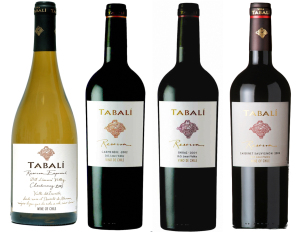
tabali.jpg 


Saturday, March 27, 4:00-6:00pm 
Viña Tabali Wines 


Puro Wine is proud to introduce Viña Tabali to the New York City market!  Tabali is located in the Limari Valley, where bright sunlight, cool breezes from the Pacific and chalky soils produce remarkable wines.  Winemaker Felipe Müller was named Best Winemaker of the Year by the Guia de Vinos de Chile 2010, and the wines have won high regards from critics around the world.  Check them out for yourself!

2008 Tabali Reserva Sauvignon Blanc, $14/btl. or $151.20/case 
2008 Tabali Reserva Especial Chardonnay, $19/btl. or $205.20/case
2007 Tabali Reserva Cabernet Sauvignon, $17/btl. or $183.60/case


Puro Wine
161 Grand Street (at Centre St)
New York NY 10013
212 925 0090

Tuesday, March 9, 2010

J. Bouchon Wine Tasting this Friday in NYC

Today I was at Puro Wine in downtown Manhattan. Seeing their selection of Chilean wine made me nostalgic for my trip, and I had to restrain myself from not buying the whole store. I picked up a few bottles and learned that this Friday from 5-7pm they will be pouring two J. Bouchon wines - Sauvignon Blanc and Carmenere. I tried these wines when I visited the winery in the Maule Valley and I highly recommend them. Stop by if you can!

J. Bouchon Wine Tasting
Friday, March 12
5-7pm

Puro Wine
161 Grand Street
New York NY 10013
212 925 0090
puro-wine.com

Tuesday, February 23, 2010

Argentina, Chile, Uruguay: My Wine Awards


I drank a lot of wine in South America! So I thought I'd wrap up the trip with a recap of my favorites. It can be tough for me to choose favorites since I believe wine-drinking is very circumstantial, but I tried my hardest to find my top picks. I've paid homage to the signature grapes of each country plus my other favorites in the major color categories. And I've rated my best food pairings and wine experiences in each country.

ARGENTINA
Fave Malbec: Colome Malbec Estate 2007
Fave Torrontes: Miraflor 2009
Fave other Red: Los Vencejos Aleteo 2006 (Tempranillo)
Fave Rose: Melipal Malbec Rose 2009
Fave Dessert wine: San Pedro de Yacochuya Late Harvest Torrontes 2007
Fave wine/food pairing: O. Fournier Urban Uco Sauvignon Blanc 2009 with steak tartar
Fave overall wine experience: Barrel sampling at Los Vencejos

CHILE
Fave Carmenere: J. Bouchon Carmenere Reserva Especial 2007
Fave other Red: Casa Marin Pinot Noir Lo Abarca Vineyard 2006
Fave Rose: J. Bouchon Cabernet Sauvignon Rose 2009
Fave White: Casa Marin Gewurztraminer 2009
Fave Dessert wine: Errazuriz Late Harvest Sauvignon Blanc 2007
Fave wine/food pairing: Errazuriz Merlot 2007 with pastel de choclo
Fave overall wine experience: J. Bouchon Winery and Mingre Lodge excursion

URUGUAY
Fave Tannat: Bouza Tannat A6 2007
Fave other Red: Alto de la Ballena Merlot-CabFranc-Tannat 2006
Fave Rose: Alto de la Ballena CabFranc-Tannat Rose 2008
Fave White: Stagnari Chardonnay 2009
Fave wine/food pairing: Bouza Chardonnay 2008 with creamy spinach ravioli
Fave overall wine experience: Wine tasting and barrel sampling at Alto de la Ballena


Thanks for following my journey! If anyone ever tries any of the wines I tried please feel free to leave a comment with your impressions.

Thursday, February 11, 2010

Oh, Fournier


Back in the province of Mendoza we visited the impressive property of Spanish implant O. Fournier, just down the road from Los Vencejos in La Consulta, Uco Valley. The ultra modern facility has 3 levels and is gravity-driven. The grapes are received on the 2nd level and sorted into large tanks that live on the 1st level. The 3rd level has the lab and tasting room, which is equipped with a dentist-style sink around the table for cleaner tastings. The huge cellar doubles as an art gallery, which seems to be a trend down here. There is also, of course, a restaurant. We had our best wine lunch yet at O. Fournier.

First course was some amazing steak tartar, the best I've ever had. The steak was chopped really small with scallions mixed in. This went really well with the Urban Uco Sauvignon Blanc 2009, which had smooth flavors of pineapple and lemon. Next was a delicious corn soup that complemented the Urban Uco Torrontes 2009, which had classic aromas/flavors of orange blossom and musk.

For our main courses Peter got veal ragout with potatoes and truffle oil and I had ginger lemon risotto. The veal was great with O. Fournier's Alpha Crux 2002, a blend of 60%Tempranillo, 35%Malbec and 5%Merlot, which was a heavy, oaky wine with dark fruit, vanilla, and meaty flavors. It got 93 points from Wine Spectator and sells for US$110 a bottle. It was a good wine, no doubt, but heavy.

The risotto was resilient, matching well with the Urban Uco line of wines: the aforementioned Sauvignon Blanc and Torrontes, as well as the Tempranillo 2007, which had really nice red berry fruit. It also went well with the B Crux 2003, a blend of 60%Tempranillo, 20%Malbec, 10%Merlot and 10%Syrah, which was unfiltered and had luscious flavors of red fruit, spice, and dark chocolate. It got 91 points from Wine Spectator and sells for US$55 a bottle. The B Crux was my favorite wine of the tasting.


For dessert, there were 2. First was a melon sorbet that made me wonder why I don't like honeydew more. It was so ripe and refreshing. Second was a somewhat bizarre coffee/chocolate ravioli with ice cream and orange jam. It went great with the Torrontes and the Alpha Crux, but the best part was the translation. In Spanish they called it "Pasta de cafe rellena de chocolate con helado de reduccion de leche y coulis de naranja," which in English was described as "Raviolis of coffee released of chocolate cream and milk reduction ice cream and orange coulis." We are still laughing about this! Released of chocolate...

A delicious, memorable lunch. We enjoyed all the wines and dishes. Felicitaciones, O. Fournier!

Sunday, February 7, 2010

Road less traveled to Colome

In the Salta province of Argentina, we set out to visit Bodega Colome, launching from Cafayate, the charming town where we were staying. We were about halfway there, enjoying the scenic route up through the mountains alongside the cacti, when we were faced with a choice of 2 directions to take. We opted for the "shorter" way because we were running late, but it was perhaps not the best choice. It was clearly the road less traveled, and for good reason - very narrow, rocky, sandy roads with no pavement in sight. At one point we almost got stuck in a sand ditch and had to build a rock path to drive over. We gathered rocks and Peter arranged them just so, building up the sand with 2 lanes of rocks so he could drive over the ditch. Once we built our bridge I directed him to ensure he stayed on the rock path, and after just 2 tries Peter got us out! We were so relieved. The next obstacle was a bit of mud and marsh, and again, 2 possible directions, but Peter assessed the situation and determined the best path, concluding that the mud was solid enough that we wouldn't get stuck. From here we could almost see Colome up in the hills. Then finally we made it there, 2200 meters above sea level, a mere 1 hour late for our appointment.

Thankfully, it was worth it! I really liked the wines here. The whites were flavorful and crisp. The reds were super concentrated but had really good flavors and complexity. All the wines here had a chalky minerality that we hadn't noticed in wines from Mendoza. This could be attributed to the rocky mountain soil. Colome has 2 additional vineyard sites besides the 2200m one we visited with the winery, and one of them is 3015 meters above sea level - the highest vineyard in the world, they say. The altitude helps cool things down in this very hot region of Argentina.


The wines:
*Mystery white: a mystery because the vines are so old and have morphed a few times from cloning, so they don't know exactly what they are. To me it tasted like Sauvignon Blanc, with gooseberry, asparagus, and jalapeno pepper.
*Torrontes 2009: at first vanilla and banana candy, then classic orange blossom as it warmed up in the glass. Different from the Torrontes we'd had so far, but interesting, and smooth with good acid.
*Amalaya 2007: a blend of mostly Malbec with some Cab Sauv and a little bit of something I can't remember. Cranberry and spice, good body and smooth tannin, my favorite of the tasting.
*Malbec Estate 2007: 85%Malbec, 8%Tannat, 5%Cab Sauv, 2%Syrah. Pure blackberry fruit, bright with firm tannin.
*Syrah 2007: a wine only available at the winery and served in their hotel's restaurant, it was pretty special with cassis, blackberry jam and a hint of cured meat. Firm tannin and almost 16% alcohol! A wine that should come with a 1-glass max. warning.

Colome is biodynamic and produces 900,000 liters of wine per year from 150 hectares of planted vines. All their supplies and equipment come from Mendoza, so everything makes that rocky, uphill climb through the Andes. There is a beautiful hotel on the property, and we now realize why. After all those bumps and jumps you totally want to take a nice long siesta. But our trip was just 3 hours, so we about-faced and took the road more traveled with no snafus. Muchas gracias to Peter for getting us there and back, no worse for the wear!

Friday, January 22, 2010

The Maule Moment

It just so happened that I saved my best winery experience in Chile for last. I made an excursion to the J. Bouchon Winery and Mingre Lodge this week in the Maule Valley, 3 hours south of Santiago. Hosted by Julio Bouchon, I learned about the history of the family, the wine, and the land. Maule Valley is the largest wine-producing region geographically, but it is only just beginning to receive recognition for the terroir and the quality wines that result - hence, the Maule moment. In terms of hectares, Bouchon is medium-sized for Chile with 370 hectares planted and 1.8 million liters of wine produced annually. All the grapes from their 3 vineyard sites are hand-picked and sorted at the winery.

In between mountain biking and horseback riding I tasted the complete lineup of wines - 3 whites, 1 rose, and 8 reds. In general the wines are fresh and fruity, with the reds showing a balanced use of French oak, sometimes new and sometimes old. Since I liked them all I have to mention them each briefly:

* Sauvignon Blanc 2009: easy-going, floral, citrusy, light.
* Chardonnay 2009: unoaked so crisp and fruity.
* Las Mercedes Sauvignon Blanc 2007: complex, oaked SB that maintains tropical fruit and acidity.
* Cabernet Sauvignon Rose 2009: strawberry, cherry, light and dry.
* Merlot Reserva 2008: strawberry with a black tea finish.
* Carmenere-Syrah Reserva 2008: interesting and unique blend with green pepper, black fruit, some chocolate.
* Cabernet Sauvignon Reserva 2008: red and black fruits, very juicy with smooth tannins.

The Reserva Especial line is made from the oldest vines - some as old as 80 years!
* Malbec Reserva Especial 2007: strawberry and vanilla with firm tannin.
* Carmenere Reserva Especial 2007: fresh bell pepper nose and red fruit with some spice.
* Cabernet Sauvignon Reserva Especial 2007: black fruit, cassis, eucalyptus; very juicy and approachable.

The Blends
* Las Mercedes Ensamblaje 2006: 45%Cab Sauv, 40%Syrah, 15%Malbec. Complex with black fruits, cassis, mint, eucalyptus, raspberry.
* Mingre 2006: 45%Cab Sauv; 15% each Carmenere, Malbec, Syrah; 10%Merlot. Similar to Las Mercedes but with brighter red fruit.

I talked a lot about the Carmenere in Chile, but I should mention that Cabernet Sauvignon is really the main grape and wine in Chile, making up 50% of wine production in Chile. Cab Sauv is not one of my favorite varieties (it is often too heavy and tannic for me) so I don't often focus on it. But, the Cab Sauvs at J. Bouchon were the best I had in Chile and some of the most enjoyable I've had to date. 

Beautiful scenery, outdoor activities, and great wine - a fantastic way to end my stay in Chile.

Thursday, January 21, 2010

Skip to Marilu

I had a fantastic experience at Casa Marin in the San Antonio Valley, west of the coastal ranges just 20 km from the ocean. I tasted the best lineup of winemaker Maria Luz Marin's wines and toured the facility with her. Marilu, as she is called, was a pioneer in planting vines on the slopes of the mountains 10 years ago. Like all pioneers, she was viewed as loco (crazy). And like all pioneers, her results proved otherwise. The vineyards on top of the hills experience a different mesoclimate (cooler, more breezy) than those at the bottom (warmer), and the taste differences are apparent in the wines, particularly the Sauvignon Blanc. In general, the area benefits from constant coastal breezes that moderate the temperature and cool things down at night.

In terms of varietals, Marilu produces all my faves: Sauvignon Blanc, Gewurztraminer, Riesling, Pinot Noir, Syrah. The Sauv Blanc and Pinot Noir are fermented naturally, while the rest are usually innoculated with yeast (with the exception of the 2009 Riesling).

The tasting:
* Riesling Miramar Vineyard 2008: set on the higher part of the hills, Miramar vineyard enjoys a cooler climate with the ocean wind naturally keeping yields lower. The nose is like a classic German Riesling - petrol, mineral, citrus. It is dry, crisp, and fresh with high acidity.
* Sauvignon Blanc Laurel Vineyard 2009: Laurel is a lower vineyard with calcereous soil and warmer temperatures that result in a higher yield. The nose was unlike anything I've ever smelled on a Sauv Blanc - cantaloupe, yellow peaches, apricot. The zesty palate has tropical and similar stone fruit flavors with a long finish.
* Sauvignon Blanc Cipresses Vineyard 2009: Cipresses is higher on the hills with a cooler climate and lower yield. This is a more typical style Sauv Blanc with pronounced gooseberry, herb, lime zest, and a tiny bit of ash on the finish.
* Sauvignon Gris 2009: 60% fermented in new French oak and the rest in stainless steel for 6-7 months. The nose had a unique fresh corn character and was smooth and tropical on the palate with some melon notes as well. This grape is a mutation/cousin of Sauv Blanc and I'd never had it before - very interesting.
* Gewurztraminer 2009: beautiful perfume aroma that at first reminded me of the Tocca Brigitte perfume I sometimes wear and then evolved into lychee and white peach followed by the softest baby powder. On the palate it was dry with pretty flowers and tropical fruit. A really beautiful wine, reminding me how much I love Gewurz.
* Pinot Noir Lo Abarca Vineyard 2006: 12 months in oak, 60% new. Served chilled to lesson the impact of the 15% alcohol (which worked since I never would have guessed it was that high). Classic PN aromas and flavors of red fruit and smoky bacon - delicious! My first Pinot in Chile and it definitely delivered.
* Cartagena Pinot Noir 2009: an experimental label launched in Nov '09, it is completely vinified in stainless steel and meant to be drunk now, cold. The nose is smoky with eucalyptus, then red fruit and meat come through on the palate. It tastes light and almost fizzy. 14% alcohol. Very interesting and pleasant.


After this fantastic lineup I did some barrel sampling with Marilu and her son Phillipe. We tried the '09 Syrah, comparing a French oak sample with an American oak sample. The French barrel was soft and fruity with very subtle spiciness. The American barrel was pure black pepper on the nose and blackberry on the palate. Both are currently going through malolactic fermentation so they will soften after this completes. They've been in barrels for 9 months so far and will remain there for at least another 6 mths. Marilu said they don't always do a Syrah - it depends on the vintage.

I had been most looking forward to this winery visit in Chile, expecting great things from Casa Marin's whites and Pinot Noir, and it was everything I had hoped for. Thanks to Marilu, Phillipe, and Jamie for hosting me and to Karen for setting it up and sharing the experience with me!

Monday, January 18, 2010

Chilean Riesling


With 2 days off from wine touring (yesterday was Election Day in Chile so wineries were closed and today I had a shopping day), I was going through a bit of withdrawal so I decided to pick up a half-bottle of wine from the supermarket (for less than US$4). It's from Underraga, who I visited last week, and it's a Sauvignon Blanc-Riesling blend from 2008. I don't think I have ever seen these 2 grapes together before so I was intrigued. Plus the bottle is a bizarre shape - reminds me of an old-school Chianti bottle or a liquor bottle. On the nose the wine has classic Sauv Blanc herbaceousness mixed with Riesling minerality and a bit of petrol. On the palate it is light and citrusy with great acidity and zest. Quite enjoyable for this sunny afternoon in Santiago. I hope there will be more Riesling in my semi-immediate future during these last few days in Chile.

Friday, January 15, 2010

Por que Santa Rita?

I am a failure because I visited Santa Rita today and I still don't know why it is called as such. Often the winery is named for a person, but nowhere in the history lessons I received did I hear the name Rita, so I am super confused about its origins. And I did the thing where I wondered it in my head several times throughout the day but never actually asked the question. I had some trouble finding my voice today - sensory overload maybe.

Anyway, Santa Rita is another classic establishment in Chile, one of the oldest wineries. It is huge and commercial but has a beautiful old cellar and a cool museum filled with South American artifacts like pottery, textiles, gold, silver, copper, and stone that were made by native people like the Incas and Mapuches.

I tried the 2 wines pictured and liked them both. The Sauv Blanc, made from their fruit grown in the Casablanca valley near the Pacific ocean (better valley for whites than Maipo) had a really luscious pineapple character and a fresh acidity. The Cab Sauv was like liquid toffee, with firm tannins. It aged for 10 months in American oak, which clearly contributed the rich toffee/butterscotch/chocolate thing going on. I could've drank this wine for dessert.

An interesting thing I learned was that they have different wines for Chilean consumption versus for export. The exported SB uses fruit from a different vineyard; the exported CS was aged in French oak for 14 months. I tried to get the reasoning behind this but I think it may have been lost in translation. In the past, higher quality wine was exported because other markets had more sophisticated palates than Chile. But now that Chile has established itself in the wine industry, the quality levels are intended to be the same, and I think the differences must be due to stylistic preferences. The exact answer remains a mystery like the origins of the name Santa Rita. Marcelo, if you are reading this, help a sister out?

Vinos de Chile - the Oscars


I managed to get myself invited to the 7th Annual Wines of Chile Awards Dinner last night, which took place at a golf course in Santiago. A panel of Canadian journalists (aka wine critics) judged the wines blind this week and the results were announced at this gala dinner, Academy Awards-style. It was very entertaining and I met some very interesting people, including the first Master Sommelier in Canada; there are only 2 in the country. Representatives from over 100 wineries were there, and I drank Casa Silva Syrah with the business manager sitting at my table. The dinner was a buffet of traditional Chilean foods from the north, central, and south. I don't think I made it to the south because there was too much food. It was heaven, with lots of seafood and Sauvignon Blanc. My favorite SB was from Montes, which is in the Colchagua Valley. After the food and formalities a Russian DJ played Chilean salsa music and American pop. The Chileans love this stuff! They don't know who Michael Jackson was but they know they like his music.

None of the winners were wineries that I am visiting on my trip, but it was a memorable cultural experience nevertheless. Special thanks to my new friend Fred (a fellow NYer and a Master Sommelier himself) for taking me to this event!

Thursday, January 14, 2010

Errazuriz: it's a tongue-twister

Funny coincidence about this place in Aconcagua Valley, Chile. The owner of Paumanok Vineyards in Long Island (where I have been before and written about in the past) married a Chilean and had their Chilean marriage ceremony at Errazuriz. You can see from the pic that this is a beautiful building, and the vineyards set in the hills are even more beautiful. I had lunch first - an unexpectedly delicious 3 courses with 3 wines as follows:

1. Sauvignon Blanc 2009 - gooseberry, herbs, fresh acidity - paired with caperberries on cream cheese toast followed by an appetizer of fresh mushrooms with red pepper and cilantro. I happen to strongly dislike both mushrooms and cilantro BUT since I had prepaid for the lunch and didn't even know what I was going to get I gave it a shot. It was actually really good; the 'shrooms were super fresh and didn't have that mushroomy taste and smell that I don't like, and the cilantro just worked. With the wine - a match made in heaven.
2. Merlot 2007 - medium body with strawberry and chocolate - a great complement to the classic Chilean dish pastel de choclo, which sounds like a dessert but is a corn cake pie with beef, chicken, hard boiled egg and a few random raisins. I was psyched to try this because my tour guide had been telling me about it. It was hearty and yummy.
3. Late Harvest Sauvignon Blanc 2007 - heavenly honey and baked apple - perfectly paired with flan/creme brulee.

Energized and buzzed, I climbed one of the hills with my PR guide Pedro, noting the sandy soil with rocks underneath, and we talked climate and terroir. He told me that they use very modern techniques to guide their viticulture techniques, including vigor maps that use radiation to determine which plants to harvest first. The property is undergoing expansion and I saw the new buildings and winemaking facility.

They make a couple of wines that they call 'wild ferment' - these wines undergo natural fermentation without the addition of yeasts the way most wines are made. Instead they let the natural yeasts on the grape skins do the work when they are ready. I tried their wild ferment Chardonnay and Pinot Noir and, not to be trite, they did taste a bit more 'wild,' or like something that I'm not sure I can describe, something funky. Their Carmenere reinforced my earlier opinion that it is very similar to Cab Franc, and I learned that it was originally suspected to be as such when the ampelographer noticed something amiss in some Chilean Merlot vineyards in 1991. By 1994 it was confirmed to be Carmenere, and after the vines were separated the first single varietal Carmenere was released in 1996. Now they know that Merlot ripens more quickly than Carmenere, and the earlier distinct taste of Chilean 'Merlot' could be attributed to the Carmenere being harvested too early and having 'green,' unripe flavors. Carmenere is now the last grape to be harvested in Chile, as it should be, during May. Harvest usually begins in February with the whites.

Ok I think that is enough wine-geekiness for one day! Chau for now (yes in Latin America they say Chau - at first I thought people were mistaking me for Italian and saying Ciao, but it seems they say the same word and spell it their own way).

Wednesday, October 14, 2009

Magdalena - what a hottie


Today we picked some Sauvignon Blanc (yes, we have 2 rows - who knew??) from Wiemer's Magdalena vineyard, which is the warmest vineyard site by about 5 degrees. Not that we could tell, because it was only about 40 degrees today. Tomorrow it's not supposed to get out of the 30's and there is snow in the forecast for tomorrow night! Thankfully I got out of work a little early today and was able to go shopping for warm clothes so I'll be ready for picking and sorting in freezing temperatures. Tomorrow I'm hoping to get a dull pair of shears so I can avoid "picking" another finger - my left pinky is still throbbing from today's mishap. Three of us have mistaken fingers for grapes in the last week, but we consider these minor injuries sacrifices to Bacchus, god of wine!

Friday, September 18, 2009

The Search for Sauvignon Blanc

Many of you who know me know that I love Sauvignon Blanc. I have even gone as far as saying it is my favorite white. I know that the Finger Lakes is known for Riesling (thanks in large part to Hermann J. himself), and I love the many personalities that grape can take on, but I have to say I am psyched to see that some producers here are making Sauv Blanc. At Ravines I was able to compare their 2007 and 2008 vintages - '07 had some great citrus flavors, but the '08 had more of that grassy herbaceous character that I love (much like the New Zealand style I covet). This week I tried Billsboro Winery's 2008 Sauvignon Blanc, which is their first vintage SB. It actually had many of the qualities similar to the '07 Ravines, with crisp acidity, grapefruit on the palate and a smooth finish. All of these SB's retail for around $17. There are probably over 100 wineries around Seneca lake and there must be a few more Sauv Blancs... the hunt is on!

Friday, September 11, 2009

Y Keuka Lake?

Because every winery has an amazing view! Here's the one from Dr. Konstantin Frank in Hammondsport, NY. Dr. Frank was the man responsible for bringing the European grapes that we all know and love (Vitis Vinifera, or Riesling, Chardonnay, Pinot Noir, etc.) to the Finger Lakes and making quality wines from them where no one had been able to before. At the winery, they greet you for your tasting and spend as much time as you want talking about the wines, making everyone feel like a VIP. Plus, the tasting is free! How often do you see that? I liked their 2007 Gewurz, but I think their most interesting wine is Rkatsiteli - an eastern European grape that pays homage to Dr. Frank's roots. It's totally unique - I really enjoyed the green olive flavors of the 2007 release and took home a bottle.

At Heron Hill Winery I tried some good Rieslings, including their 2007 Reserve Old Vines Riesling ($24.99), 2006 Classic Dry Riesling ($12.99), and 2006 Ingle Vineyard Riesling ($15.99). The Reserve Old Vines was an Alsation style and had a really nice long finish thanks to slightly higher alcohol (13% compared to 12% on the other two). Here I also learned that 2007 was the best vintage of the century for Pinot Noir in the Finger Lakes. I am now curious to explore this further. Their Reserve was good, but for $29.99 I thought I might be able to do better.

My hunch was affirmed at Ravines Wine Cellars, where I was WOWed by their 2007 Pinot Noir, a Burgundian style full of cherry and spice, which I didn't hesitate to buy at $22.95. Ravines was a great way to end the day. I did their wine and chocolate pairing, featuring Hedonist Artisan Chocolates from Rochester, NY. There were a lot of wines to like here, including:
2007 Dry Riesling
2008 Sauvignon Blanc
2007 Chardonnay (with Hedonist sesame milk chocolate)
2006 Cerise (red blend - 80% Pinot Noir and 20% Lemberger - with Hedonist cherry dark chocolate)
2007 Pinot Noir
2007 Cabernet Franc (with Hedonist cranberry orange peel dark chocolate)
2006 Meritage (Bordeaux blend - Cab Sauv, Cab Franc, Merlot - with their very own infused Hedonist truffle)

I got to taste the wines for free and received a 20% discount on the bottles I bought because of my affiliation with Hermann J. Wiemer Vineyard! Apparently winery employees are eligible for these bennies at all Finger Lakes wineries. Too bad I didn't know that for the prior two ;)

PS Keuka Lake is just west of Seneca Lake and is shaped like a 'y'