Showing posts with label Chile. Show all posts

Sunday, May 18, 2014

Wine and Watches

Last week the San Francisco Wine Center sponsored a tasting at Ben Shemano Jewelry, a beautiful second-floor showroom in Union Square that specializes in antique and custom jewelry.  For collectors of the finer things in life, the focus of the evening was on fine wristwatches from designers including Rolex, Patek Phillipe and Audemars Piguet.  For the group of about 30 people I helped pour an array of wines from around the world and shared stories about winemaking and travel. We even learned that the late owner of Pride Mountain Vineyards in Napa Valley was a former dentist. Wonder what toothpaste he’d recommend for wine stains? He actually wasn’t a practicing dentist but a consultant who advised other dentists on how to optimize their office layouts.

From the white wine drinkers we found many Sancerre lovers and even converted some to Riesling fans. It was a warm evening in San Francisco and many opted for the cold ones. We encountered those who thought Riesling was always sweet, so we educated them on the various styles of Riesling and the labeling term used to denote ‘dry’ in German, which is ‘trocken.’

Red wine fans enjoyed classic west coast examples of Pinot Noir, Petite Sirah, and Zinfandel, plus a Chilean blend dominated by Cabernet Sauvignon. A couple of magnums dared to impress bold palates and showed how the right amount of air can make a wine open up.

Inevitably, with an even number of wines it’s easy to find yourself comparing. 2 whites, 2 reds, 2 magnums. The Sancerre had a flowery nose and a rich palate. The Riesling had the distinct petrol nose that developed into stone fruit, followed by beautiful citrus and orange blossom on the palate. The Oregon Pinot Noir was earthy and leathery, while the Napa Petite Sirah had a flowery but smoky nose with spice, lead pencil and roses on the palate. The two magnums couldn't be more different; the Brown Zinfandel was immediately rich, fruity and lush, while the Chilean blend was super tight, smoky and herbal at first, eventually opening up to reveal warm spice, red fruit, and an herbal forest.  I found this one to be the most interesting, particularly as it evolved over the course of the evening.


Wine List
  1. Gitton Sancerre 2012 - France
  2. Peter Jakob Kuhn Riesling Trocken 2010 – Germany
  3. Provocateur Pinot Noir Willamette Valley 2003 - Oregon
  4. Pride Petite Sirah Napa Valley 2003 – California
  5. Brown Estate Zinfandel Napa Valley 2006 – California (Magnum)
  6. Primus The Blend Colchagua Valley 2008 – Chile (Magnum)

Bites from The City Kitchen complimented the wines and provided a wonderful appetizer to later dinner plans. For some, the jewelry was dessert.  


Thursday, March 25, 2010

Sauv Blancs for Spring - this weekend at Puro Wine

This weekend at Puro Wine, Manhattan's hotspot for Chilean wine, try some Sauvignon Blancs for Spring!
 
clava_quintay.jpg


Friday, March 26, 5:00-7:00pm 
Quintay Wines 


Quintay is an affiliation of landowners in Chile's Casablanca Valley, and winemaker Vicente Johnson selects the best plots of each vintage year to make Quintay wines.  The Sauvignon Blancs are fresh, dry and crisp - ideal for the beginning of Spring!  The Pinot offers more fruit and body than you might expect, with concentrated red fruit, dried herb notes and a velvety texture.
 
2008 Quintay Clava Sauvignon Blanc, $11/btl. or $118.80/case 
2008 Quintay Sauvignon Blanc, $16/btl. or $172.80/case
2007 Quintay Pinot Noir, $21/btl. or $226.80/case


tabali.jpg 


Saturday, March 27, 4:00-6:00pm 
Viña Tabali Wines 


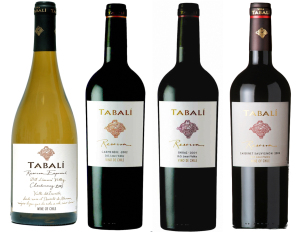
Puro Wine is proud to introduce Viña Tabali to the New York City market!  Tabali is located in the Limari Valley, where bright sunlight, cool breezes from the Pacific and chalky soils produce remarkable wines.  Winemaker Felipe Müller was named Best Winemaker of the Year by the Guia de Vinos de Chile 2010, and the wines have won high regards from critics around the world.  Check them out for yourself!

2008 Tabali Reserva Sauvignon Blanc, $14/btl. or $151.20/case 
2008 Tabali Reserva Especial Chardonnay, $19/btl. or $205.20/case
2007 Tabali Reserva Cabernet Sauvignon, $17/btl. or $183.60/case


Puro Wine
161 Grand Street (at Centre St)
New York NY 10013
212 925 0090

Friday, March 19, 2010

This weekend at Puro Wine: Viña Morande & Haras de Pirque


This weekend, Puro Wine (located at the corner of Grand Street and Centre Street in lower Manhattan) is featuring these 2 Chilean producers for free tastings.

Friday, March 19, 5:00-7:00pm
Viña Morande Wines


Viña Morande's Pionero and Reserva wines celebrate the social, welcoming and easygoing qualities of modern Chilean wine.  Morande is based in the Casablanca Valley, a cool region that produces fresh, fruit-forward whites and Pinot Noirs.  Priced at $9 and $12 each, they're the perfect wines to pour for parties too.

2008 Morande Reserva Sauvignon Blanc, $12/btl. or $129.60/case
2009 Morande Pionero Pinot Noir, $9/btl. or $97.20/case
2008 Morande Pionero Cabernet Sauvignon, $9/btl. or $97.20/case
2008 Morande Reserva Pinot Noir, $12/btl. or $129.60/case

Saturday, March 20, 4:00-6:00pm
Haras de Pirque Wines

Haras de Pirque is tucked in the foothills of the Andes Mountains in the upper Maipo Valley, where they produce excellent Cabernet Sauvignon as well as thoroughbred horses.  (Note the winery was designed in the shape of a horseshoe.)  This tasting focuses on two levels of Cabernet - the Equus and the Elegance - that both offer value and finesse well above the price tag.
2007 Haras de Pirque Estate (Equus) Cabernet Sauvignon, $14/btl. or $151.20/case
2005 Haras de Pirque Elegance Cabernet Sauvignon, $45/btl.

ALSO: In support of rebuilding Chile after the recent earthquake, several big importers and distributors are donating their profits to Chile. This month when you purchase the 2007 Errazuriz Single Vineyard Cabernet Sauvignon or any wine from Montes, all profits go to relief efforts. 

Sunday, March 14, 2010

Chile's Long Hill - Loma Larga

Last week at Puro Wine in lower Manhattan I picked up this bottle of wine for the weekend. I hadn't visited Loma Larga while I was in Chile, but the manager highly recommended it when I said I was looking for a mid-priced Pinot so I took her suggestion. It was really enjoyable, with a powerful nose and flavors of rose petal, red fruit, chocolate, and a bit of funk. It's a silky, fuller bodied Pinot with 14.5% alcohol, and I sipped it without food (unless chips and dip count?) and quite liked it.

The Loma Larga 2007 Pinot Noir received 90 points from Robert Parker, Wine Advocate, and it retails for $21 at Puro Wine (161 Grand Street).

Tuesday, March 9, 2010

J. Bouchon Wine Tasting this Friday in NYC

Today I was at Puro Wine in downtown Manhattan. Seeing their selection of Chilean wine made me nostalgic for my trip, and I had to restrain myself from not buying the whole store. I picked up a few bottles and learned that this Friday from 5-7pm they will be pouring two J. Bouchon wines - Sauvignon Blanc and Carmenere. I tried these wines when I visited the winery in the Maule Valley and I highly recommend them. Stop by if you can!

J. Bouchon Wine Tasting
Friday, March 12
5-7pm

Puro Wine
161 Grand Street
New York NY 10013
212 925 0090
puro-wine.com

Friday, March 5, 2010

Help Chile - drink their wine

Some of the areas that I visited during my wine trip to Chile were severely affected by the earthquake on February 28. Wineries in the Maule Valley and Colchagua Valley sustained damage to their equipment and cellars, and a significant amount of wine has been lost - hundreds of thousands of liters. Many people lost their homes and some places are still without water and electricity.


These pictures are from J. Bouchon Winery, who lost a fair amount of wine and suffered some structural damage. But everyone there is ok and they are gearing up for their 2010 harvest.


If you want to help Chile, why not check out Puro Chile and Puro Wine in Manhattan at Centre St. and Grand St. - they sell lots of Chilean wines, crafts, olive and avocado oils (there are a lot of avocados in Chile and the oil is really good).

Puro Chile
221 Centre Street
New York, NY 10013
212 217 9362
puro-chile.com

Puro Wine
161 Grand Street
New York NY 10013
212 925 0090
puro-wine.com

Buena Suerte, Chile!

Tuesday, February 23, 2010

Argentina, Chile, Uruguay: My Wine Awards


I drank a lot of wine in South America! So I thought I'd wrap up the trip with a recap of my favorites. It can be tough for me to choose favorites since I believe wine-drinking is very circumstantial, but I tried my hardest to find my top picks. I've paid homage to the signature grapes of each country plus my other favorites in the major color categories. And I've rated my best food pairings and wine experiences in each country.

ARGENTINA
Fave Malbec: Colome Malbec Estate 2007
Fave Torrontes: Miraflor 2009
Fave other Red: Los Vencejos Aleteo 2006 (Tempranillo)
Fave Rose: Melipal Malbec Rose 2009
Fave Dessert wine: San Pedro de Yacochuya Late Harvest Torrontes 2007
Fave wine/food pairing: O. Fournier Urban Uco Sauvignon Blanc 2009 with steak tartar
Fave overall wine experience: Barrel sampling at Los Vencejos

CHILE
Fave Carmenere: J. Bouchon Carmenere Reserva Especial 2007
Fave other Red: Casa Marin Pinot Noir Lo Abarca Vineyard 2006
Fave Rose: J. Bouchon Cabernet Sauvignon Rose 2009
Fave White: Casa Marin Gewurztraminer 2009
Fave Dessert wine: Errazuriz Late Harvest Sauvignon Blanc 2007
Fave wine/food pairing: Errazuriz Merlot 2007 with pastel de choclo
Fave overall wine experience: J. Bouchon Winery and Mingre Lodge excursion

URUGUAY
Fave Tannat: Bouza Tannat A6 2007
Fave other Red: Alto de la Ballena Merlot-CabFranc-Tannat 2006
Fave Rose: Alto de la Ballena CabFranc-Tannat Rose 2008
Fave White: Stagnari Chardonnay 2009
Fave wine/food pairing: Bouza Chardonnay 2008 with creamy spinach ravioli
Fave overall wine experience: Wine tasting and barrel sampling at Alto de la Ballena


Thanks for following my journey! If anyone ever tries any of the wines I tried please feel free to leave a comment with your impressions.

Friday, January 22, 2010

The Maule Moment

It just so happened that I saved my best winery experience in Chile for last. I made an excursion to the J. Bouchon Winery and Mingre Lodge this week in the Maule Valley, 3 hours south of Santiago. Hosted by Julio Bouchon, I learned about the history of the family, the wine, and the land. Maule Valley is the largest wine-producing region geographically, but it is only just beginning to receive recognition for the terroir and the quality wines that result - hence, the Maule moment. In terms of hectares, Bouchon is medium-sized for Chile with 370 hectares planted and 1.8 million liters of wine produced annually. All the grapes from their 3 vineyard sites are hand-picked and sorted at the winery.

In between mountain biking and horseback riding I tasted the complete lineup of wines - 3 whites, 1 rose, and 8 reds. In general the wines are fresh and fruity, with the reds showing a balanced use of French oak, sometimes new and sometimes old. Since I liked them all I have to mention them each briefly:

* Sauvignon Blanc 2009: easy-going, floral, citrusy, light.
* Chardonnay 2009: unoaked so crisp and fruity.
* Las Mercedes Sauvignon Blanc 2007: complex, oaked SB that maintains tropical fruit and acidity.
* Cabernet Sauvignon Rose 2009: strawberry, cherry, light and dry.
* Merlot Reserva 2008: strawberry with a black tea finish.
* Carmenere-Syrah Reserva 2008: interesting and unique blend with green pepper, black fruit, some chocolate.
* Cabernet Sauvignon Reserva 2008: red and black fruits, very juicy with smooth tannins.

The Reserva Especial line is made from the oldest vines - some as old as 80 years!
* Malbec Reserva Especial 2007: strawberry and vanilla with firm tannin.
* Carmenere Reserva Especial 2007: fresh bell pepper nose and red fruit with some spice.
* Cabernet Sauvignon Reserva Especial 2007: black fruit, cassis, eucalyptus; very juicy and approachable.

The Blends
* Las Mercedes Ensamblaje 2006: 45%Cab Sauv, 40%Syrah, 15%Malbec. Complex with black fruits, cassis, mint, eucalyptus, raspberry.
* Mingre 2006: 45%Cab Sauv; 15% each Carmenere, Malbec, Syrah; 10%Merlot. Similar to Las Mercedes but with brighter red fruit.

I talked a lot about the Carmenere in Chile, but I should mention that Cabernet Sauvignon is really the main grape and wine in Chile, making up 50% of wine production in Chile. Cab Sauv is not one of my favorite varieties (it is often too heavy and tannic for me) so I don't often focus on it. But, the Cab Sauvs at J. Bouchon were the best I had in Chile and some of the most enjoyable I've had to date. 

Beautiful scenery, outdoor activities, and great wine - a fantastic way to end my stay in Chile.

Thursday, January 21, 2010

Skip to Marilu

I had a fantastic experience at Casa Marin in the San Antonio Valley, west of the coastal ranges just 20 km from the ocean. I tasted the best lineup of winemaker Maria Luz Marin's wines and toured the facility with her. Marilu, as she is called, was a pioneer in planting vines on the slopes of the mountains 10 years ago. Like all pioneers, she was viewed as loco (crazy). And like all pioneers, her results proved otherwise. The vineyards on top of the hills experience a different mesoclimate (cooler, more breezy) than those at the bottom (warmer), and the taste differences are apparent in the wines, particularly the Sauvignon Blanc. In general, the area benefits from constant coastal breezes that moderate the temperature and cool things down at night.

In terms of varietals, Marilu produces all my faves: Sauvignon Blanc, Gewurztraminer, Riesling, Pinot Noir, Syrah. The Sauv Blanc and Pinot Noir are fermented naturally, while the rest are usually innoculated with yeast (with the exception of the 2009 Riesling).

The tasting:
* Riesling Miramar Vineyard 2008: set on the higher part of the hills, Miramar vineyard enjoys a cooler climate with the ocean wind naturally keeping yields lower. The nose is like a classic German Riesling - petrol, mineral, citrus. It is dry, crisp, and fresh with high acidity.
* Sauvignon Blanc Laurel Vineyard 2009: Laurel is a lower vineyard with calcereous soil and warmer temperatures that result in a higher yield. The nose was unlike anything I've ever smelled on a Sauv Blanc - cantaloupe, yellow peaches, apricot. The zesty palate has tropical and similar stone fruit flavors with a long finish.
* Sauvignon Blanc Cipresses Vineyard 2009: Cipresses is higher on the hills with a cooler climate and lower yield. This is a more typical style Sauv Blanc with pronounced gooseberry, herb, lime zest, and a tiny bit of ash on the finish.
* Sauvignon Gris 2009: 60% fermented in new French oak and the rest in stainless steel for 6-7 months. The nose had a unique fresh corn character and was smooth and tropical on the palate with some melon notes as well. This grape is a mutation/cousin of Sauv Blanc and I'd never had it before - very interesting.
* Gewurztraminer 2009: beautiful perfume aroma that at first reminded me of the Tocca Brigitte perfume I sometimes wear and then evolved into lychee and white peach followed by the softest baby powder. On the palate it was dry with pretty flowers and tropical fruit. A really beautiful wine, reminding me how much I love Gewurz.
* Pinot Noir Lo Abarca Vineyard 2006: 12 months in oak, 60% new. Served chilled to lesson the impact of the 15% alcohol (which worked since I never would have guessed it was that high). Classic PN aromas and flavors of red fruit and smoky bacon - delicious! My first Pinot in Chile and it definitely delivered.
* Cartagena Pinot Noir 2009: an experimental label launched in Nov '09, it is completely vinified in stainless steel and meant to be drunk now, cold. The nose is smoky with eucalyptus, then red fruit and meat come through on the palate. It tastes light and almost fizzy. 14% alcohol. Very interesting and pleasant.


After this fantastic lineup I did some barrel sampling with Marilu and her son Phillipe. We tried the '09 Syrah, comparing a French oak sample with an American oak sample. The French barrel was soft and fruity with very subtle spiciness. The American barrel was pure black pepper on the nose and blackberry on the palate. Both are currently going through malolactic fermentation so they will soften after this completes. They've been in barrels for 9 months so far and will remain there for at least another 6 mths. Marilu said they don't always do a Syrah - it depends on the vintage.

I had been most looking forward to this winery visit in Chile, expecting great things from Casa Marin's whites and Pinot Noir, and it was everything I had hoped for. Thanks to Marilu, Phillipe, and Jamie for hosting me and to Karen for setting it up and sharing the experience with me!

Alpacas and grapes


On Tuesday the workers at Viña Matetic on the border of the San Antonio and Casablanca Valleys caught their alpacas eating the Chardonnay grapes. I guess this is one of the cons of having an organic winery. Of course one of the pros is that the alpacas, and the sheep and other animals that share the land with the grapes, contribute naturally to the cycle of life in this environment (mostly because their waste is used as fertilizer). Matetic has been certified organic for 4 years and has been working to become biodynamic since 2002. Biodynamic practices are complicated and include 'rituals' like spreading carefully prepared mixtures of manure at certain times throughout the vineyard. Isn't winemaking so romantic?

The Matetic winemaking facility is built into the hills with a lot of large rocks and smooth wood flanking the interior. It is gravity-driven so they don't need to pump the wine from one place to the other. The family Matetic was the first to plant Syrah in the area, in 1999. The Coralillo Syrah 2008 was a gorgeous fuschia color with blackberry, smoke, and roses. The tannins were firm and it could probably use more time in the bottle. Failing that option it may also be great with a steak. The Winemaker's Blend 2007 is 44% Cab Franc, 30% Merlot, and 26% Malbec. It had a spicy cinnamon nose with flavors or black fruit, rose, and caramel. It too would probably benefit from some meat and/or more bottle time.


I think I was most excited about seeing the alpacas :) Although it would've been even better to eat some grapes with them.

Monday, January 18, 2010

Chilean Riesling


With 2 days off from wine touring (yesterday was Election Day in Chile so wineries were closed and today I had a shopping day), I was going through a bit of withdrawal so I decided to pick up a half-bottle of wine from the supermarket (for less than US$4). It's from Underraga, who I visited last week, and it's a Sauvignon Blanc-Riesling blend from 2008. I don't think I have ever seen these 2 grapes together before so I was intrigued. Plus the bottle is a bizarre shape - reminds me of an old-school Chianti bottle or a liquor bottle. On the nose the wine has classic Sauv Blanc herbaceousness mixed with Riesling minerality and a bit of petrol. On the palate it is light and citrusy with great acidity and zest. Quite enjoyable for this sunny afternoon in Santiago. I hope there will be more Riesling in my semi-immediate future during these last few days in Chile.

Saturday, January 16, 2010

Cruzing

Colchagua Valley, Chile - home to the little town of Santa Cruz and the picturesque wineries MontGras and Bisquertt.


MontGras was just beautiful, with purple flower gardens accenting the vineyards. At this point in the lifecycle of the vine (summertime) the grapes are developing and for the most part have not yet gone through veraison, or color development. So all the grapes I've seen so far down here have been an unripe green, until today at MontGras, where I witnessed their Pinot Noir beginning to turn purple. At MontGras I actually had my favorite Chardonnay of the trip yet. It was 60% aged in French oak and the rest stainless steel, and it went through partial malolactic fermentation. The result was a smooth wine with tropical fruit flavors.


At Bisquertt, I saw huge Chilean oak barrels that are no longer used for fermenting wine but are now made into regal chairs. Sitting in one of these chairs fit for a queen I had my first Chilean Gewurztraminer, which was delicious. Not many wineries in Chile have this variety so I was so happy to try it. It was flowery on the nose and tropical/citrusy on the palate, just like it should be.


Colchagua Valley is the first area in Chile that slightly resembles other wine areas that I've been to the before. Maybe it's the Andes, but before today every where I'd been seemed so unique. In Colchagua there actually seems to be a wine trail, a main road where you pass multiple wineries along the way. There is even a Wine Train that leaves from Santa Cruz and takes people along the route. You drink wine on the train, learn about the industry and visit 2 vineyards. Tren del Vino! Maybe next time.

Friday, January 15, 2010

Por que Santa Rita?

I am a failure because I visited Santa Rita today and I still don't know why it is called as such. Often the winery is named for a person, but nowhere in the history lessons I received did I hear the name Rita, so I am super confused about its origins. And I did the thing where I wondered it in my head several times throughout the day but never actually asked the question. I had some trouble finding my voice today - sensory overload maybe.

Anyway, Santa Rita is another classic establishment in Chile, one of the oldest wineries. It is huge and commercial but has a beautiful old cellar and a cool museum filled with South American artifacts like pottery, textiles, gold, silver, copper, and stone that were made by native people like the Incas and Mapuches.

I tried the 2 wines pictured and liked them both. The Sauv Blanc, made from their fruit grown in the Casablanca valley near the Pacific ocean (better valley for whites than Maipo) had a really luscious pineapple character and a fresh acidity. The Cab Sauv was like liquid toffee, with firm tannins. It aged for 10 months in American oak, which clearly contributed the rich toffee/butterscotch/chocolate thing going on. I could've drank this wine for dessert.

An interesting thing I learned was that they have different wines for Chilean consumption versus for export. The exported SB uses fruit from a different vineyard; the exported CS was aged in French oak for 14 months. I tried to get the reasoning behind this but I think it may have been lost in translation. In the past, higher quality wine was exported because other markets had more sophisticated palates than Chile. But now that Chile has established itself in the wine industry, the quality levels are intended to be the same, and I think the differences must be due to stylistic preferences. The exact answer remains a mystery like the origins of the name Santa Rita. Marcelo, if you are reading this, help a sister out?

The devil's cellar


Today I'm back in the Maipo Valley to visit the classic Concha y Toro, one of the oldest wineries in Chile. They are most known in the US for value wines. It was great to see the expansive property and cellars. Their production is over 15 million liters of wine per year. They own several labels around Chile. One of them, Cono Sur, located in the south, won a couple of the Wines of Chile awards last night. They also have a premium wine that they don't export, which is a collaboration with Baron Phillipe de Rothschild in France.

Security is tight at Concha y Toro. In the olden days they had a problem with theft in the original cellar that held the family's wines, so they started a rumor that the cellar was guarded by the devil. After that they didn't notice any more missing bottles - people were very superstitious then. Now they commemorate that story with a line of value wines called Casillero del Diablo, the devil's cellar.

I had a classic empanada for lunch after my tour with a glass of their Terrunyo Carmenere 2006, which was a good complement to this meat pastry. To be frank, I didn't make this visit for the wine but for the history.

Next up - another classic, Santa Rita!

Vinos de Chile - the Oscars


I managed to get myself invited to the 7th Annual Wines of Chile Awards Dinner last night, which took place at a golf course in Santiago. A panel of Canadian journalists (aka wine critics) judged the wines blind this week and the results were announced at this gala dinner, Academy Awards-style. It was very entertaining and I met some very interesting people, including the first Master Sommelier in Canada; there are only 2 in the country. Representatives from over 100 wineries were there, and I drank Casa Silva Syrah with the business manager sitting at my table. The dinner was a buffet of traditional Chilean foods from the north, central, and south. I don't think I made it to the south because there was too much food. It was heaven, with lots of seafood and Sauvignon Blanc. My favorite SB was from Montes, which is in the Colchagua Valley. After the food and formalities a Russian DJ played Chilean salsa music and American pop. The Chileans love this stuff! They don't know who Michael Jackson was but they know they like his music.

None of the winners were wineries that I am visiting on my trip, but it was a memorable cultural experience nevertheless. Special thanks to my new friend Fred (a fellow NYer and a Master Sommelier himself) for taking me to this event!

Thursday, January 14, 2010

Errazuriz: it's a tongue-twister

Funny coincidence about this place in Aconcagua Valley, Chile. The owner of Paumanok Vineyards in Long Island (where I have been before and written about in the past) married a Chilean and had their Chilean marriage ceremony at Errazuriz. You can see from the pic that this is a beautiful building, and the vineyards set in the hills are even more beautiful. I had lunch first - an unexpectedly delicious 3 courses with 3 wines as follows:

1. Sauvignon Blanc 2009 - gooseberry, herbs, fresh acidity - paired with caperberries on cream cheese toast followed by an appetizer of fresh mushrooms with red pepper and cilantro. I happen to strongly dislike both mushrooms and cilantro BUT since I had prepaid for the lunch and didn't even know what I was going to get I gave it a shot. It was actually really good; the 'shrooms were super fresh and didn't have that mushroomy taste and smell that I don't like, and the cilantro just worked. With the wine - a match made in heaven.
2. Merlot 2007 - medium body with strawberry and chocolate - a great complement to the classic Chilean dish pastel de choclo, which sounds like a dessert but is a corn cake pie with beef, chicken, hard boiled egg and a few random raisins. I was psyched to try this because my tour guide had been telling me about it. It was hearty and yummy.
3. Late Harvest Sauvignon Blanc 2007 - heavenly honey and baked apple - perfectly paired with flan/creme brulee.

Energized and buzzed, I climbed one of the hills with my PR guide Pedro, noting the sandy soil with rocks underneath, and we talked climate and terroir. He told me that they use very modern techniques to guide their viticulture techniques, including vigor maps that use radiation to determine which plants to harvest first. The property is undergoing expansion and I saw the new buildings and winemaking facility.

They make a couple of wines that they call 'wild ferment' - these wines undergo natural fermentation without the addition of yeasts the way most wines are made. Instead they let the natural yeasts on the grape skins do the work when they are ready. I tried their wild ferment Chardonnay and Pinot Noir and, not to be trite, they did taste a bit more 'wild,' or like something that I'm not sure I can describe, something funky. Their Carmenere reinforced my earlier opinion that it is very similar to Cab Franc, and I learned that it was originally suspected to be as such when the ampelographer noticed something amiss in some Chilean Merlot vineyards in 1991. By 1994 it was confirmed to be Carmenere, and after the vines were separated the first single varietal Carmenere was released in 1996. Now they know that Merlot ripens more quickly than Carmenere, and the earlier distinct taste of Chilean 'Merlot' could be attributed to the Carmenere being harvested too early and having 'green,' unripe flavors. Carmenere is now the last grape to be harvested in Chile, as it should be, during May. Harvest usually begins in February with the whites.

Ok I think that is enough wine-geekiness for one day! Chau for now (yes in Latin America they say Chau - at first I thought people were mistaking me for Italian and saying Ciao, but it seems they say the same word and spell it their own way).

Entiendo español de vino!


I had a great experience at Viña von Siebenthal in the Aconcagua Valley. I met the assistant winemaker, Darwin, and he confessed that he did not speak English. My guide, Lisette, offered to translate. My Spanish is so-so, but I said to her, let me see what I can understand and I'll let you know if I need an explanation. Happily, I understood almost everything Darwin said! So maybe my Spanish isn't so great but I can understand wine-Spanish, and that is good.

Viña von Siebenthal produces about 10,000 cases, a little bit smaller than Wiemer. They pick all the grapes by hand and sort twice, in the vineyard and in the winery. They only produce reds, which are stainless steel fermented and barrel aged. In the barrel the wines undergo spontaneous malolactic fermentation, which turns harsh natural acids into softer ones. They do not filter their wines. I tried their 2008 Carmenere and 2006 Parcel 7, a blend of Cab Sauv, Merlot, Cab Franc, and Petit Verdot - a very Bordelais blend. Both wines were delicious.

Before we left we tried a large yellow fruit off a tree on the vineyard property. It looked like a lumpy yellow grapefruit but had a very thick skin and tasted sour like a lemon at first with a slightly sweet finish. It was called a lima. When I was eating it I thought it would be great in a vodka martini...

Underraga: if I could roll my R's this would be even more fun to say

Chile's Maipo Valley - so far so good. On my first day of wine touring I visited a classic, Cousiño Macul, one of the oldest wineries in Chile. It was cool to see their old cellars and the equipment they used to use for winemaking. Then I went to the gorgeous property of Underraga, walking through their gardens and vineyards before seeing their winery. Rodrigo told me all about their history and practices. He let me take a whiff of an aging barrel of Carmenere, which could've gotten him fired, he said. The most interesting vinification process that I learned about was their technique for removing the sediment in their red wines. Naturally solids are part of the winemaking process, and it's the winemaker's job to get them out somehow, through natural settling, filtering, etc. At Underraga they bring the temperature of the stainless steel tanks down so that the sediment freezes and remains on a rack inside the tank. The clean wine is then drawn out through hoses and into barrels. This type of tank seems very cool to me.

Here I got my first taste of Carmenere, but it was blended so at this point I cannot make any firm conclusions about this variety. But I did learn about the origin of this grape here. It's a funny story, and my disclaimer is that it may not be 100% accurate but you will get the idea. In the 1900s Chileans brought grape varieties over from France - Cab Sauv, Merlot, Syrah, etc. - to make quality wine. When phylloxera hit Europe, the US, and other places around the world in the mid-1900s, Chile wasn't affected. So they were the only wine market for a bit while the other areas had to rebuild. People were starting to notice Chile. They said, Hey this Merlot from Chile is really different and good. Well, it was Carmenere, mixed with Merlot. The vines had been mixed up and planted together. So they had unknowingly been making Merlot-Carmenere blends. A top ampelographer confirmed this, and they began planting Carmenere and vinifying it on its own. Now Chile is known for the grape variety. After phylloxera hit France they couldn't grow it again, so Carmenere is to Chile what Tannat is to Uruguay - the signature grape.

To me, Carmenere has similar characteristics to Cabernet Franc - red fruit, bell pepper, black pepper spice. It is medium bodied with soft tannins. I still have much to explore in the way of Carmenere, but my initial impressions are good.

The mountains are everywhere, the Andes to the east and the coastal ranges to the west. These mountains help create mesoclimates perfect for growing grapes. There is a lot of sun and the nights are breezy and cool. Can´t complain!

Friday, December 18, 2009

Exploring the wine world

Happy Holidays! I'm back in the tri-state area and I've been busy planning my trip to Argentina, Chile, and Uruguay for the new year. I've also been working at a wine shop in Manhattan, which is a great way to keep learning and drinking. A couple interesting wines that I tried and liked included a 2007 Petit Rouge (similar to Pinot Noir) from northern Italy and a 2008 Tempranillo from northern Spain:


Both wines were light and easy to drink and retail for around $20. I'm finding that you can get a lot of good wines from all over the world at this price point!